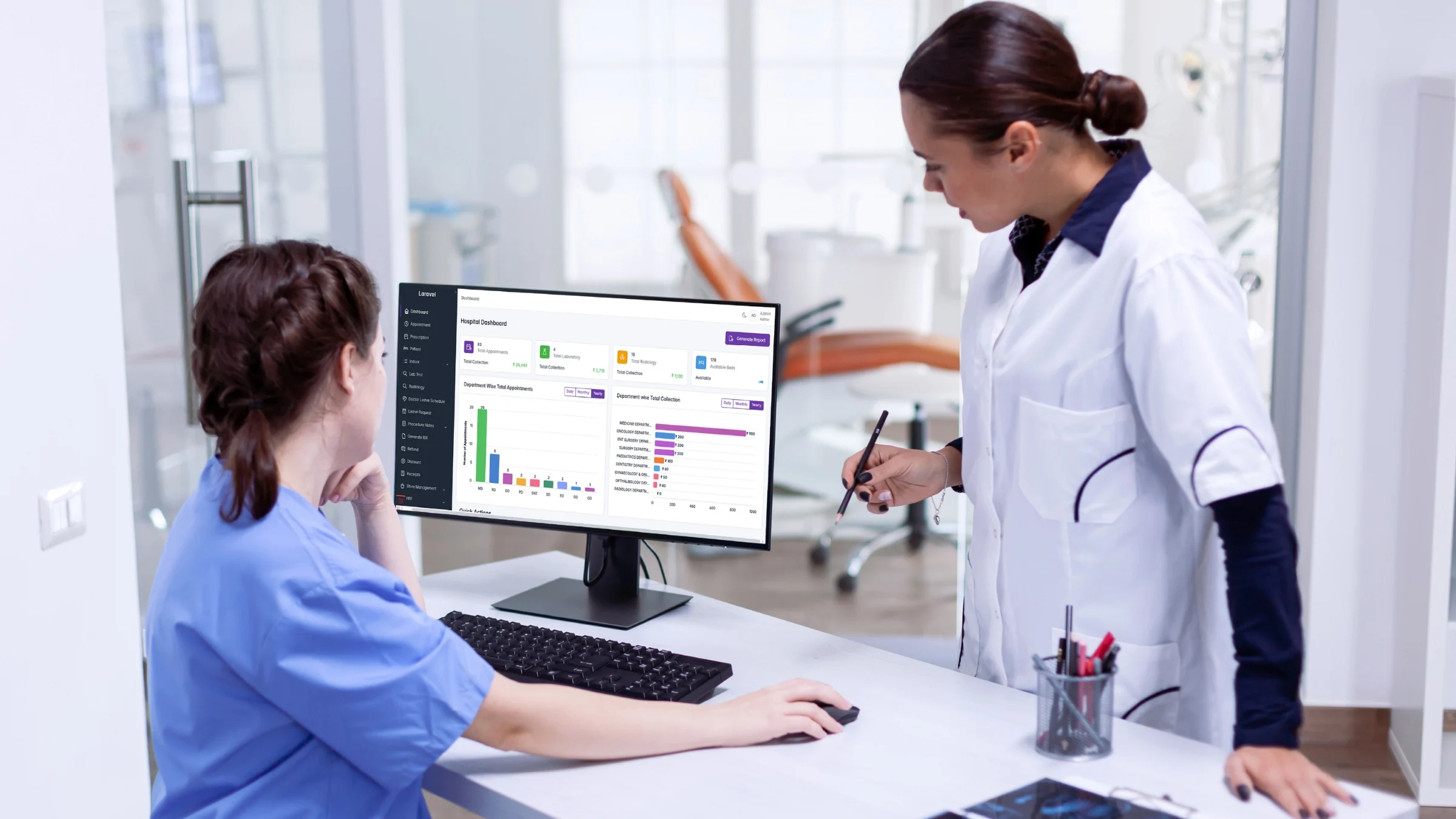
A hospital today has many systems that exist and are interconnected through a digital network called the hospital management system (HMS), which acts as the conductor for all these systems in the hospital.
So, what makes an HMS such as DiCare an excellent HMS, compared with an average HMS?
Breaking The Traditional HMS Model With DiCare
Simplicity And Ease Of Use Vs. Complexity
The conventional method of gaining access to a HMS is the aircraft cockpit interface. Many existing traditional methods for designing the HMS have been developed by firms supplying enterprise software for the health care industry with an emphasis on constructing an HMS that will integrate easily with their current enterprise application systems. Consequently, as a consequence of this type of methodology there exists a very large number of options (buttons & screens) for health care providers to navigate and utilize without significant training, a fact that can greatly limit their effectiveness when using the system. In contrast to the traditional method for accessing a HMS, DiCare has created an easy-to-use, streamlined user interface allowing health care professionals to log on quickly and begin working within the system within minutes rather than weeks.
Consequently, in a high-stress, time-sensitive environment (caused in part by staffing shortages) time spent on training to use the HMS is also time that cannot be used to provide health care to patients.
A Single Profile For A Patient
Intelligence Built In by DiCare
DiCare is not only a database of information but can also be an analytical tool for analyzing that information in a hospital management software system. The analytical ability of DiCare provides the capability to find behaviours and trends that may otherwise have been overlooked by an individual reviewing the same datasets. For example, if there are unusual wait times in the emergency department of a hospital, DiCare can identify these behaviours and trends and provide information on them. Further, if a prediction of the number of occupied beds in a hospital for the next weekend is needed, DiCare can use historical data to make a prediction. From all of this information, DiCare will allow administrators to take a proactive approach as opposed to a reactive approach using hospital management software.
Technical Edge Without the Jargon
Cloud Freedom
The company has moved away from using physical server rooms; instead, DiCare is now entirely cloud-based. Thus, software can always be automatically updated, and both security and accessibility have increased dramatically (i.e., DiCare now provides secure, bank-level access and availability through the internet). Physicians may now view and edit patient files when they are at home, and administrators can also access reports while traveling. This system will run effectively without needing continuous maintenance or costly hardware upgrades.
Plays Well With Others
The Patient Experience Revolution
At DiCare, we believe that healthcare is much more than the operation of a hospital or clinic; it is a service to the patient. The patient portal gives you control of your healthcare decisions. Want to book an appointment at midnight? Check your test results as soon as they are available? Pay your bill online? No problem! This digital convenience reduces calling reception and frees up staff to spend time with patients who require personal assistance.
Mobile apps take this convenience to another level. Patients can receive appointment reminders, medication alerts, and communicate directly with their care team via their mobile device. With this type of accessibility, healthcare is available and accessible!
Support That Actually Supports
Conclusion
Health systems are transitioning towards a future that is increasingly connected and driven by data. Thus, the limitations of traditional approaches for managing hospitals (HMS), such as simplicity, separating patient records and reactive decision-making, have become impossible to ignore when considering how most health systems conduct the overall delivery of health care today. DiCare is taking a new approach to HMS by making the way that HMS works more user-friendly for those who will be using it every day and ultimately for the patients that HMS serves.
By combining simplicity, a unified patient profile, built-in intelligence, cloud-based flexibility, and true interoperability, DiCare transforms the HMS from a passive record-keeping tool into an active enabler of better care.